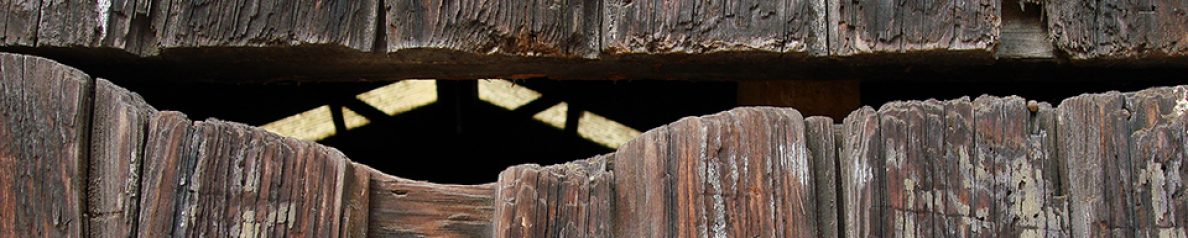
Endurance
still standing
after so many bombs
the water tower
Following our local guide from the Danube riverbank into the main part of Vukovar, we pass a boarded up corner shop with pock-marked walls. For centuries this was a prosperous and harmonious multi-ethnic town. Until Nationalism tore it apart; splintered families; turned neighbours into enemies.
Stopping in front of a building from 1818 with a restored yellow façade and red-tile roof, the guide points out a stork pair nesting on the chimney. She tells us the story of two other storks. The story captivated all of Croatia and travelled beyond its borders.
The romance of Malena and Klepetan happened in the town of Brodski Varoš in eastern Croatia, not far from Vukovar. It began during the Yugoslav wars when a man found an injured stork that had been shot by hunters. Stjepan decided to take care of her. Because of her damaged wing, Malena couldn’t fly away for the winter. He cared for her at his home. In spring Stjepan built a platform on the roof for her to nest on.
After some years a male stork started visiting Malena. Klepetan returned year after year in spring, flying 13,000 km from South Africa. One year he arrived after another stork had already bred with Malena, but Klepetan chased off the invader. Another year he arrived early then disappeared before summer. People were afraid he had died. But the next year he returned. For about 20 years the pair bred and raised chicks with the help of Stjepan, until Malena died of old age in 2021.
In 1991 the Serb-dominated Yugoslav army and Serbian paramilitaries besieged Vukovar for 87 days. War crimes were committed. The town was under Serbian control for several years, then returned to Croatia. Selected baroque buildings have been faithfully restored to their former glory, but others still bear the scars of war. Damaged structures, such as the 1960s water tower, serve as memorials. Old wounds haven’t fully healed. A man and storks can be friends but in Vukovar Croats and Serbs don’t sit together in the same café. Our guide wonders what the future holds for her children in a town that remains so culturally fractured.
geraniums spilling
from the second floor windows
half-ruined house
first published in Kokako 44, 2026
Nowhere to Hide
As we stand around in the intense afternoon heat, the guide, in her clipped English, points out various national memorials outside the entrance to Mauthausen — so many in the camp were political prisoners, transported from across Europe; force-marched or travelling in overcrowded open freight cars for days and weeks with little or no water or food.
Inside the main gate we enter the long courtyard lined with timber barracks and stone administration buildings. The basement of the stone-walled laundry is where the new prisoners were deloused after they had been marched uphill from the railway station.
blinding glare
in the roll call yard
no shade
Another of the stone buildings housed the crematoria and gas chamber. The methods of murdering more than 90,000 people at Mauthausen included: overwork and work accidents in the granite quarry, falling to their deaths after being pushed off the cliff above the quarry, execution by hanging or shooting, beatings, starvation, untreated illnesses and poison gas.
The granite quarry, the main reason the camp was set up at Mauthausen, employed civilian experts to oversee the technical aspects of the work, while starving slaves laboured up to eleven hours a day, breaking rocks and carrying 50kg blocks up the narrow, steep steps, whatever the weather.
fringed now by trees
the hundred and eighty-six
stairs of death
Civilians lived in barracks on the camp’s perimeter. The surrounding hills are farmed, as they were in the nearly seven years between when the camp opened in August 1938 and when it was liberated in May 1945.
farmhouses dot
rolling green hills
the silence
The road that leads to the quarry and main gate passes a grassed area that the guide says was once a football field. She tells how townspeople were invited by the concentration camp administration to watch football matches there. And how close it was to the fence around the infirmary camp, where sick prisoners were banished – naked, starving, left to die.
At each stop the guide asks, how could the local people not know?
clear blue sky
all my photos
black and white
first published in Kokako 44, 2026
Long Night
This afternoon my friend is in a noisy four-bed room in the neurology ward. It’s maybe the fourth or fifth bed I’ve visited her at in three hospitals over the past three months. Behind the flimsy curtain, in the next cubicle the TV is booming. Opposite, also unseen, visitors chat with another patient. While she waits to be transferred to the specialist cancer hospital across the road, my friend updates me on her situation. The tumour is growing again, impacting on nerves. A couple of days ago she was progressing in her rehabilitation, able to stand and walk a few steps. Now she’s hoping that, with hard work, she’ll be able to get back to that level of function. Her arms and legs are still strong, but she may never walk unaided again.
The surgeon and his deputy arrive. I push the visitor’s chair back to make room for them at the end of the bed. The operation will be at 10 am tomorrow. They’ll have to remove some bone where the tumour is spreading, meaning they’ll put screws into her spine for stability. It’s going to be a more aggressive surgery than the first one six weeks ago.
My friend tells the surgeon we are both engineers, and she appreciates what the titanium screws can do.
walking home
by full moon’s light
winter solstice
first published in Kokako 42, 2025
Signposts
dappled shade
I’ve sometimes wondered where the name of the Gymea lily came from. The plant grows near the coast around Sydney and isn’t confined to the suburb of Gymea. Whenever I take the train south from Sydney to Wollongong, I see these lilies on rocky hillsides in the Royal National Park – rosettes of large strappy leaves and flower stems pushing boldly up towards the canopy of eucalypts.
rounding a bend
A few years ago, I was up north on Worimi Country visting Gan Gan Hill Lookout with its view of Nelson Bay. On the sandstone outcrop the large, bright red clusters of flowers topping the tall green stems appeared like flaming beacons. A traditional owner told me that the stems make good fishing spears because they float easily. He also said that the flowering time marks the season when people would customarily gather at a nearby headland.
into sunshine
Today I happened to walk the Guriwal Trail in Centennial Park, three kilometres from Sydney’s coast. A sign informs me that the D’harawal eora and common Sydney language name for the Gymea lily is Kaimeeagh. Together with Gawura, the whale, Kaimeeagh belongs to the saltwater Gari songline. Different stages of flowering tell the D’harawal when to go to sandstone headlands to sing the whales on their migrations north and south.
first published in Kokako 41, 2024
Privileged
Two fires blaze at the south end of the beach, in the lee of a headland cliff. Smoke rises into the star-filled sky. Despite mid-winter cold, retreat members all stand back from the flames, making space for the dancers.
Older men, painted up with white ochre, begin to sing and mark the rhythm with clapsticks. Also painted up, the young men weave intricate patterns around the fires. They sing and call out sharply in the crisp air. Sand flies as their feet step, jump, stamp and kick. The dancers’ arms glide in graceful arcs. Singing and dancing their totem, Umbarra, the black duck, the men’s torsos shine with sweat.
sons and fathers
together on country
a breaking wave
After many spirited dances, both fires are burning down. The elders invite us watchers to join in. Making one big circle with the Yuin men, we stamp and clap anticlockwise around the flames. Together we are winding back time.
The music finishes. The young men peel away, run down to the surf and dive in, laughing.
our shadows falling
across the ancient midden—
Murramarang
haibun first published in Kokako 39, 2023; our shadows falling haiku first published in Windfall 8, 2020
Near and Far
In the darkness of Sydney’s Enmore Theatre Billy Bragg sings Woody Guthrie’s words to new tunes; brief whistle stops in a rambling freight train ride through Woody’s life, from Oklahoma to the New York island. Following Bob Dylan’s talkin’ so long New York, howdy East Orange blues, the Bard of Barking walks a road other folks have gone down.
The crowd spills out of a theatre that’s been operating since before Woody was born. As I walk the few blocks home, voices fade away. The scent of star jasmine drifts from someone’s garden. Bat wings sigh over the dark shapes of trees.
a train’s rattle
at the end of the night
bound for glory
first published in Drifting Sands Haibun 22, July 2023
On a Journey
Hattōji’s ‘International Villa’ farmhouse looks out over the emerald green terraces of summer rice paddies. I leave the glass doors and shōji screens wide open when evening arrives. From my futon I hear frog croakings and cricket chirrupings that start, stop and start again in cryptic rhythm. The tatami matting gives off a faint grassy fragrance. Through the insect screen I can make out a spray of stars.
dawn light …
a cicada on the doorpost
shedding its shell
first published in Drifting Sands Haibun 21, May 2023
Exposure
An exhibition of Robert Mapplethorpe photographs recently opened at the Art Gallery of New South Wales, in Sydney, where I’ve lived most of my life. The show includes the first Mapplethorpe image I ever saw, Man in Polyester Suit, in the journal Photofile. This was before I knew that Mapplethorpe was the creator of iconic images of Patti Smith. Reading a newspaper review of the exhibition I recall that first image which reminds me of an incident from my teenage years.
Weekdays I would commute to my all-girls high school by bus and then train. This morning the bus ride is much the same as usual. I sit in my summer school uniform, straw hat on my head. Because they make it hard to turn the pages of the book I’m reading, I’ll only put on my gloves when I get off the bus. I can risk not wearing them because no prefects or teachers ever travel on my bus.
A businessman gets on and takes the empty seat beside me. He spreads a newspaper over his lap. Some movement catches my attention, and I glance over from my book. Instead of reading the newspaper, he is using it as cover to expose himself to me.
a chill wind …
moonlight streams through
torn clouds
first published in Unsealing Our Secrets, Curated and Edited by Alexis Rotella, April 2018
This page was last updated: 27 March 2026
 L E Mumford